








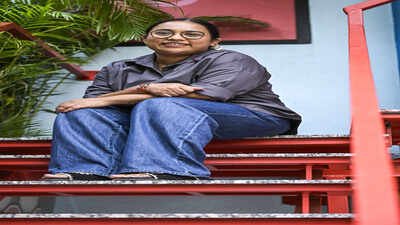
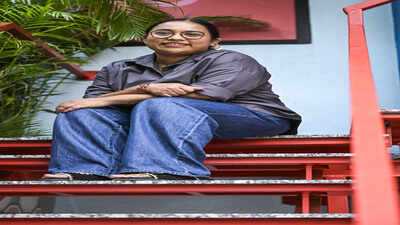
One of Kannada stand-up comedy’s most recognisable voices, Sonu Venugopal has built her career by telling deeply personal stories rooted in everyday life, language and culture. From leaving behind a career in radio to finding her place on stage, she has carved out a niche that is both distinctly regional and universally relatable. In a candid conversation with Bangalore Times, Sonu speaks about fame, failure, trolls, mental health, motherhood, identity, and why she’d rather build a long, sustainable career than chase celebrity.DO YOU FEEL COMEDIANS TODAY HAVE TO BE MORE CAREFUL BECAUSE AUDIENCES CAN TAKE OFFENCE SO EASILY? I don’t toe the line. My goal is to be moderately famous — not so famous that I become a constant target. I want to sell tickets, make a living and make people laugh. That’s enough. I also think Indian stand-up is still evolving. America has had decades to develop its comedy culture. We’ve only had around 15 years of stand-up being mainstream. India is incredibly diverse. What offends one person won’t offend another. As a comedian, it’s impossible to account for every individual’s sensitivity while writing jokes. HOW DO YOU DEAL WITH TROLLING AND ONLINE CRITICISM? The hardest criticism comes from myself. I’ve been doing this long enough to know that online trolls are predictable. They’ll comment on your appearance, say women aren’t funny, or recycle the same stereotypes. I don’t engage. I block, restrict or hide comments and move on. Social media gives you those tools, and I use them.WOULD YOU CALL YOURSELF YOUR BIGGEST CRITIC? Definitely. You can’t become too attached to either failure or success. A bad show hurts. A great show feels wonderful. But in both cases, you move on because tomorrow there’s another show to write.WHAT MAKES A SHOW ‘BAD’? IS IT WHEN JOKES DON’T LAND? Not necessarily. Sometimes the jokes don’t work. Sometimes there are technical issues. Sometimes you simply aren’t at your best. But audiences are rarely the problem. Nobody spends money on a ticket hoping they’ll have a bad evening. They’ve come because they want to enjoy themselves. Sometimes they’re tired after work or stuck in traffic, so it takes a little longer to connect. Once they do, they’re completely with you. HOW DO YOU DEAL WITH A BAD SHOW? I sulk. I genuinely do. I thought that by now I’d have developed a system to deal with it, but I haven’t. I allow myself to feel bad, and then I immediately want another show because I don’t want to spiral into self-doubt. Sometimes, writing one good joke at home can remind me that I’m still capable. Artists are insecure by nature. There’s always a voice asking, “Is this enough?” What I’ve learnt is that not every day has to be a 10 on 10. Some days are a three, some a four. The important thing is to keep showing up.IS THERE CAMARADERIE AMONG FEMALE COMEDIANS? Absolutely. Whenever a woman comedian releases a special, we’re the first to recommend it. I don’t see men doing that as often for women, so we’ve built our own support system. In regional comedy especially, collaboration works beautifully because our audiences are often different. We perform together, support each other and cheer each other on. At the end of the day, the process is the same for all of us. We observe, write, test, rewrite and perform.DO COMEDIANS GIVE EACH OTHER FEEDBACK?Constructive feedback is rare, but invaluable. Someone saying, ‘Maybe don’t do comedy’, isn’t feedback. Someone saying, ‘Move this joke after that one,’ or ‘This punchline could be stronger,’ is. You need one or two trusted people in the industry who understand the craft. You seem remarkably detached from success and validation. I entered comedy after I got married. I wasn’t trying to impress anyone. I started because I genuinely enjoyed it. Validation came later. Today, if someone tells me they loved my work, I’m grateful. If they don’t, that’s okay too.HOW DO YOU MEASURE SUCCESS? A sold-out show. People laughing. People clapping. People coming back for another show. That’s enough. I don’t need gifts or grand gestures. I just want audiences to have a good time and go home happy.‘ON STAGE, I AM THE HEROINE OF MY OWN NARRATIVE’ I did one film and absolutely loved the experience. But after that, I kept getting offered similar kinds of roles. And I thought, Come on, we all want to be the heroine, don’t we? Stand-up gives me that. On stage, I’m the heroine of my own narrative. I’m the leading lady, and I enjoy that. Everything else: money, fame and success, is just a by-product. What I truly love is being on stage. If you asked me to choose between acting and stand-up, I’d always choose stand-up.