









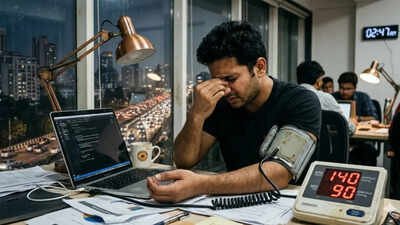
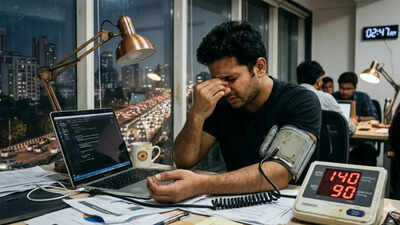
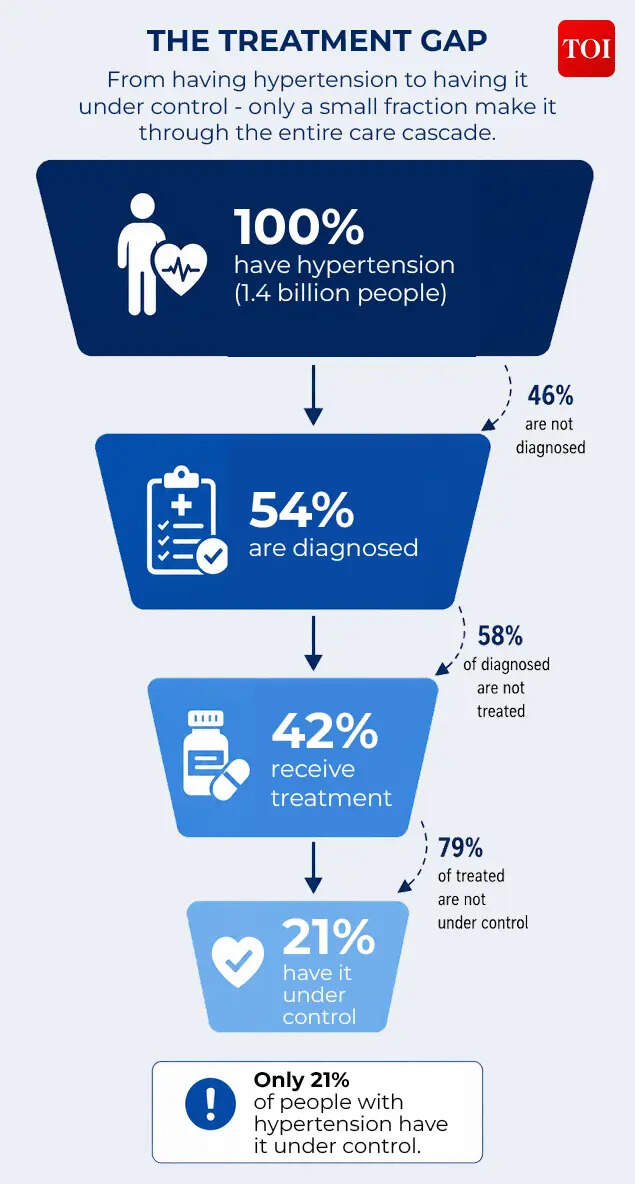
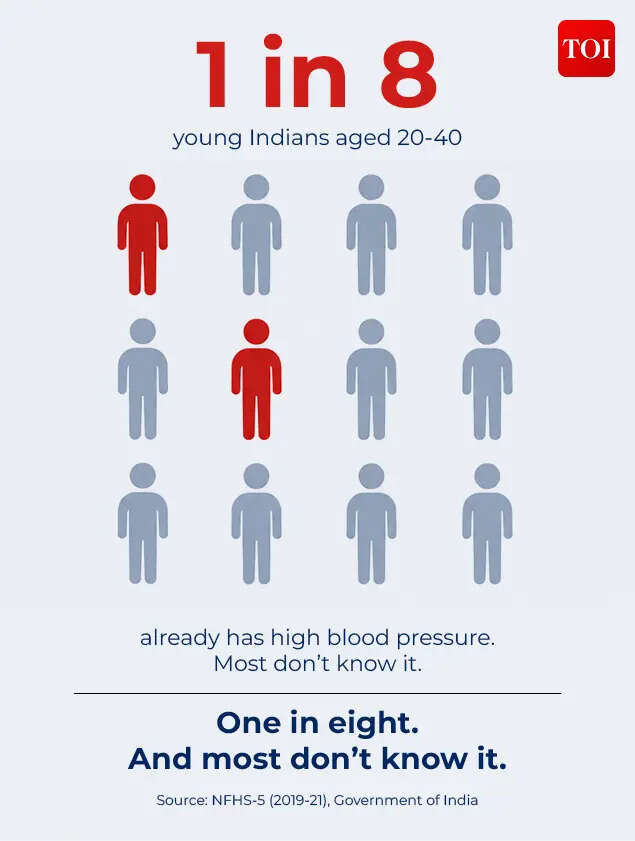
There is a killer amongst us. It is quiet, careful, and almost undetectable until it’s too late. Globally nearly 1.4 billion people have met this killer. It is not a virus or a new pandemic. It is hypertension — and in India, it has found its youngest victims yet. One in eight Indians aged 20 to 40 already has high blood pressure. Most don’t know it.Hypertension or HTN has historically not been a young people disease, but over the past few years it has started affecting a younger demographic. What is even more concerning is that it goes undetected in many young adults, leading to extremely low rate of diagnosis and treatment. Globally, only 54 per cent of people with hypertension are diagnosed. Of those, 42 per cent receive treatment, and just 21 per cent have their blood pressure under control. The absence of early symptoms often delays detection, especially in young adults who do not see themselves at risk.
Given these concerning figures it is only fair to ask two questions: what has made young people more susceptible to HTN and how can one prevent this?
What has made young people more susceptible?
A 2025 study in the Indian Journal of Kidney Diseases calls it “finding the needle in a haystack.” Unlike older adults where essential hypertension dominates, up to 30 per cent of young adults with high blood pressure have an underlying secondary cause, often a reversible one. This includes renal artery stenosis, adrenal tumours, or thyroid disorders. The problem is that doctors often assume hypertension in young people is “essential” and stop looking. But many doctors assume a young person’s high BP is simply genetics or lifestyle. They prescribe medication and move on. They don’t dig deeper.The study presents a telling case: a 27-year-old man on three BP medications whose hypertension was actually caused by an adrenal adenoma. What was the clue? Hypokalemia, low potassium, which had been ignored by previous doctors. Once the tumour was removed, his BP stabilised on just one drug.This pattern is far more common than most clinicians realise. Primary hyperaldosteronism (Conn’s syndrome) accounts for 7 to 13 per cent of all hypertension cases, and up to 20 per cent of resistant hypertension cases. The problem is that up to 50 per cent of cases present with normal potassium levels, so they go undiagnosed.But secondary causes are only part of the story. A 2026 study from West Bengal, published in the Indian Journal of Community Medicine, found that 59 per cent of young adults used either tobacco or alcohol. Those who did had 2.57 times higher odds of developing hypertension. Yet, while nearly 80 per cent knew the harmful effects, only two out of 87 tobacco users willing to quit were on any de-addiction therapy. For alcohol users willing to quit, the number was zero.But the rising burden of hypertension among young Indians is not just about missed diagnoses or rare tumours. It is also about what we eat, how we live, and how easily bad food finds us. The Indian diet has always had its strengths — vegetables, lentils, whole grains — but also its weaknesses: high in refined carbs, heavy on oils, and often lacking adequate protein. What has changed is the addition of packaged snacks, deep-fried street food, restaurant meals loaded with hidden salt, and the normalization of eating out or ordering in multiple times a week. And instant delivery apps have made it all worse. Your craving is just a few taps away. Earlier, you had to step out, walk to the shop, maybe think twice. That small pause, that tiny friction, is gone. Now there is no time between want and get. So we eat more, we eat worse, and we eat faster.Add to this a work culture that celebrates 14-hour desk jobs, rewards burnout, and treats sleep as a luxury. Work-life balance barely exists for most young professionals in our cities. We commute in traffic, stare at screens, skip meals, eat late, order in, and then wonder why our bodies are breaking down. Chronic stress is no longer an exception. It is the default setting of young India.
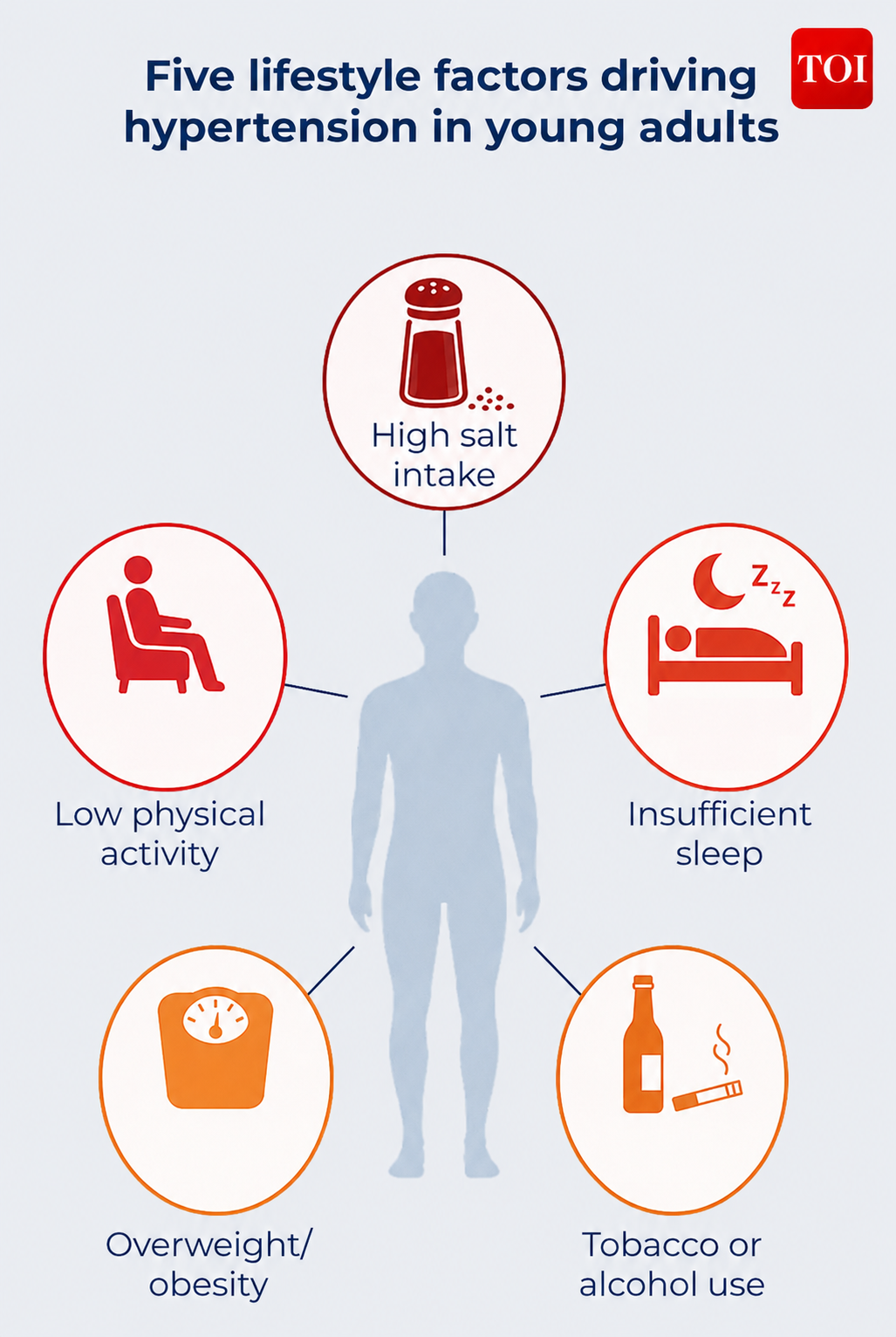
Dr Pradeep Kumar D, Senior Consultant – Cardiology, Sakra World Hospital, Bengaluru, explains: “Over the past few years, we’ve seen a significant rise not only among the elderly but also among people in their 30s and 40s. Stressful work environments, irregular eating habits, lack of exercise, poor sleep, and excessive dependence on processed foods are major drivers.”Consider the case of a 29-year-old professional in Gurgaon. She was diagnosed with hypertension this January. She works at a start-up — late nights, gruelling deadlines, a competitive culture, and surviving on food delivery. Her lifestyle has caught up with her.Dr Madhurima Nundy, MBBS, MPH. Academic Research Associate, UNCOVER, Usher Institute, University Of Edinburgh puts it plainly: “There is an urgent need for early screening, preventive interventions, and lifestyle modifications to mitigate the growing hypertension burden in younger populations. Lifestyle modification includes low salt intake, limiting alcohol and smoking, exercising 3-5 times per week, preventing stress, and improving sleep patterns. Medication may be needed if lifestyle modifications fail to control high BP or due to non-modifiable risk factors such as genetics.”
How can one prevent this?
The good news is that hypertension in young people is largely preventable. The bad news is that young people are not being screened, and doctors are not looking hard enough.First, screening must start earlier. The NFHS-5 data shows that hypertension prevalence in young adults increased from 13.8 per cent in 2015 to 18.3 per cent in 2020. Yet routine BP checks are not part of annual health packages for young people. A 2014 PLOS ONE study found that none of the men under 30 with high BP were aware of their condition. Only 4 per cent of men in their thirties knew. That is not a screening gap. That is a screening failure.Second, secondary causes must be ruled out. Any young person with hypertension — especially if resistant to medication — should be evaluated for renal artery stenosis, adrenal disorders, and thyroid dysfunction. A simple blood test for potassium and renal function can save years of unnecessary medication.Third, lifestyle modification is the first line of defence. Dr Manali Patel , Senior Consultant , Intensivist , ISIC Multi-Speciality Hospital, Delhi emphasises: “Hypertension in young people is primarily driven by poor diet, obesity, physical inactivity, and excessive sodium intake. Chronic stress, poor sleep, smoking, and heavy alcohol use further elevate blood pressure. Early screening and lifestyle changes are essential to prevent long-term cardiovascular damage.“The evidence is clear: exercise 150 minutes per week, reduce salt intake below 5 grams per day, limit alcohol, quit smoking, and manage stress. These are not suggestions. They are prescriptions.
This World Hypertension Day, make a start
May 17 is not meant to be another awareness event that comes and goes. It is a reminder. Young India is sitting on a cardiovascular time bomb. One in eight already has hypertension. Most don’t know it. The pyramid has flipped. Hypertension is no longer your grandfather’s disease. It is yours.
If you have never checked your blood pressure, go to a chemist, a clinic, or a friend with a monitor. It takes two minutes. If your reading is above 130/80, do not ignore it. See a doctor. Ask questions. Rule out secondary causes. For those already diagnosed, check if your medication is working. Make one small lifestyle change this week. Walk for 15 minutes. Skip the extra salt. Sleep an hour earlier. Small changes compound.The WHO estimates that scaling up hypertension treatment could prevent 1.5 million heart attacks and strokes in India alone over the next decade. That is not a statistic. That is fathers, mothers, colleagues, friends. That is the 29-year-old in Gurgaon. She caught it in time. Not everyone does.So this World Hypertension Day, do not just read this article and scroll past. Check your blood pressure. Ask your younger sibling, your colleague, your parent. The silent killer does not announce itself. But you can listen for it. It is now your responsibility to first check if it has reached you, or prevent it from reaching you.