










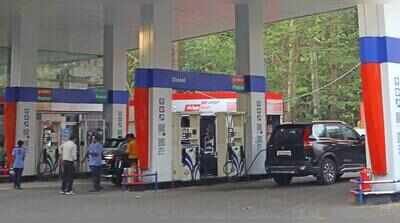
Mangaluru: Fuel bunk owners in Dakshina Kannada and Udupi have stepped up precautionary measures amid fears of rainwater entering underground petrol storage tanks and contaminating the fuel. According to a member of the Karnataka State Federation of Petroleum Dealers, around 20 to 30 cases of water contamination were reported during last year’s monsoon.The risk is higher with E20 petrol as its ethanol content makes it more susceptible to contamination when water seeps into storage tanks, said a dealer.Anand Karnad, state secretary, Karnataka State Federation of Petroleum Dealers, said that underground tanks are vulnerable to water seepage during torrential rains. Water can quickly accumulate in manholes and must be pumped out immediately, but overnight rainfall can still lead to seepage, he said.Fuel stations use automated tank gauging (ATG) systems with an interlock relay, which automatically shuts pumps if water is detected. However, Karnad noted that even after removing water, some contamination may remain, leading to losses and affecting engine firing. Karnad said that the federation has advised fuel dealers to take precautions such as covering manhole lids with plastic sheets to prevent water from entering.A dealer said that before ethanol blending, water would settle to the bottom and could be removed without affecting petrol, but with E20, ethanol’s affinity for water increases the risk of contamination.Industry members say that contamination leads to wastage, as affected fuel has to be removed, and there is no protection for dealers if such losses occur. Disposal of contaminated fuel is a major challenge, as it cannot be discarded easily and handling is also an issue. They claimed that they have been repeatedly urging the govt to suspend ethanol blending during the monsoon, and alleged that petroleum companies have not installed silica gel units at outlets to absorb moisture and that losses incurred are not reimbursed.