









Amid Iran’s move to control traffic passing through the Strait of Hormuz, the world’s most critical maritime chokepoint has become a litmus test for how far states can go in monetising global trade routes.Indonesia’s recent attempt — floated in late April 2026 by its finance minister to levy charges on vessels transiting the Strait of Malacca — was walked back within hours under intense regional and international pressure, highlighting how any attempt to commercialise such passages now triggers immediate geopolitical and economic alarm.Against this backdrop, the question is no longer whether geography determines trade, but how much political control, sanctions and financial leverage can reshape who pays, who profits and who ultimately governs the flow of goods through the world’s key trade arteries.
Airlines, shipping companies and intermediaries now operate in overlapping legal and financial grey zones across air, sea and land corridors, where compliance is often unclear, cross-border payments are made via fragmented financial systems and enforcement varies widely across jurisdictions.
.
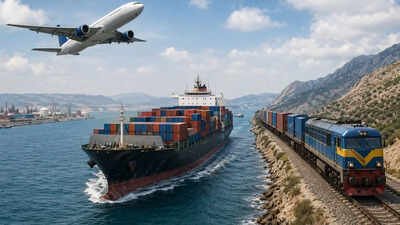
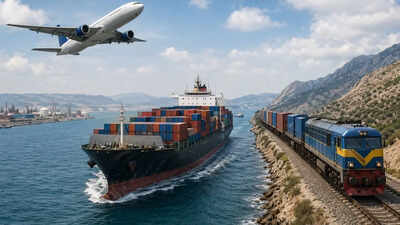
Trade remains the backbone of the global economy – connecting producers, markets and consumers across continents – yet the system that governs worldwide supply chains is far from uniform.Some corridors operate under recognised international fee structures and institutional oversight, while others are shaped by sanctions, bilateral arrangements or shifting control over key transit points. This growing divergence between formal global rules and operational realities is reshaping how international commerce moves through the world’s most strategic trade arteries.
Who governs global transit charges in trade routes
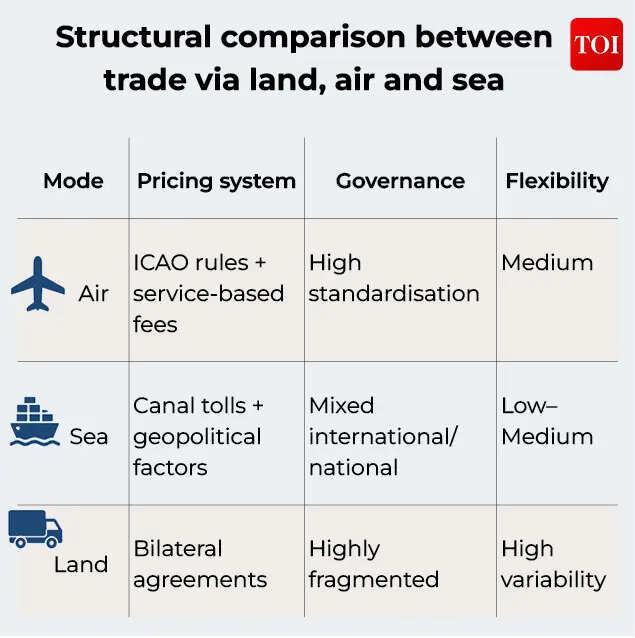
The system that governs transit charges in global trade is not uniform and varies sharply across air, sea and land routes. It is shaped by an amalgamation of international rules, national authority and practical mechanisms for collecting payments.In aviation, overflight charges are generally based on established international practices that allow countries to levy fees for aircraft passing through their airspace. These payments are usually routed through formal institutions or designated agencies.In maritime trade, transit charges are closely linked to control over strategic waterways. Countries located along key chokepoints can impose tolls, restrictions or access conditions on vessels passing through their waters.
.
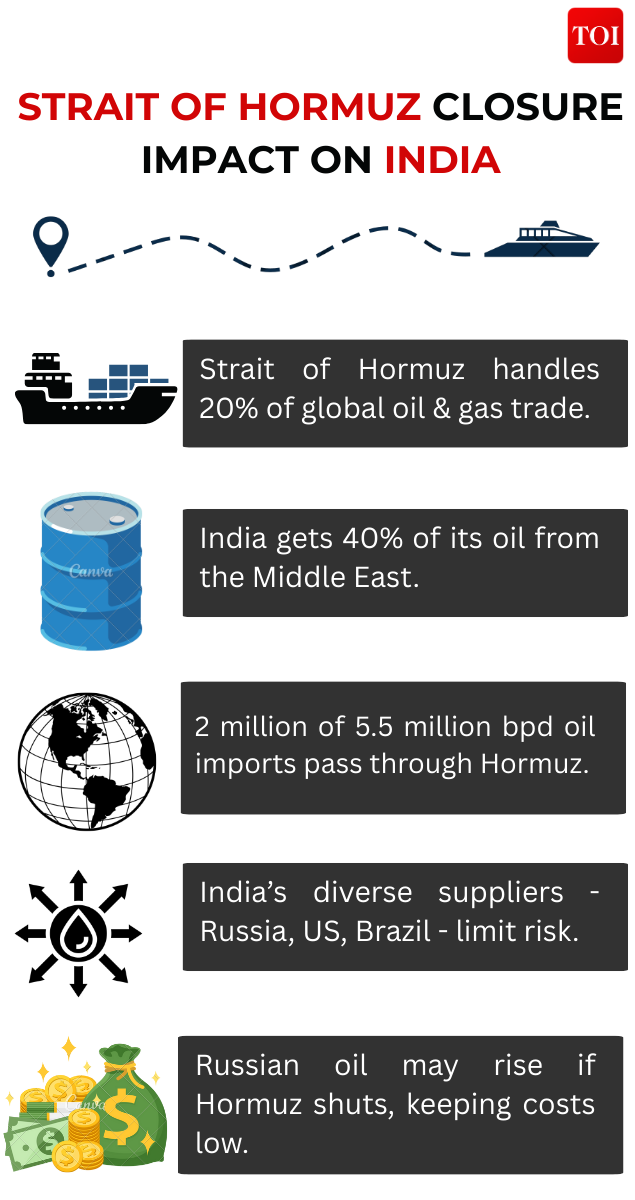
The Strait of Hormuz is a clear example where passage is influenced not only by commercial rules but also by geopolitical tensions, making the transit of goods costly and disrupting global trade.Land routes operate on a more fragmented basis. Unlike aviation and maritime systems, there is no global mechanism for standardised transit charges. Costs are determined largely through bilateral agreements between neighbouring countries, along with local infrastructure and border arrangements.
Maritime chokepoints and control over global shipping routes
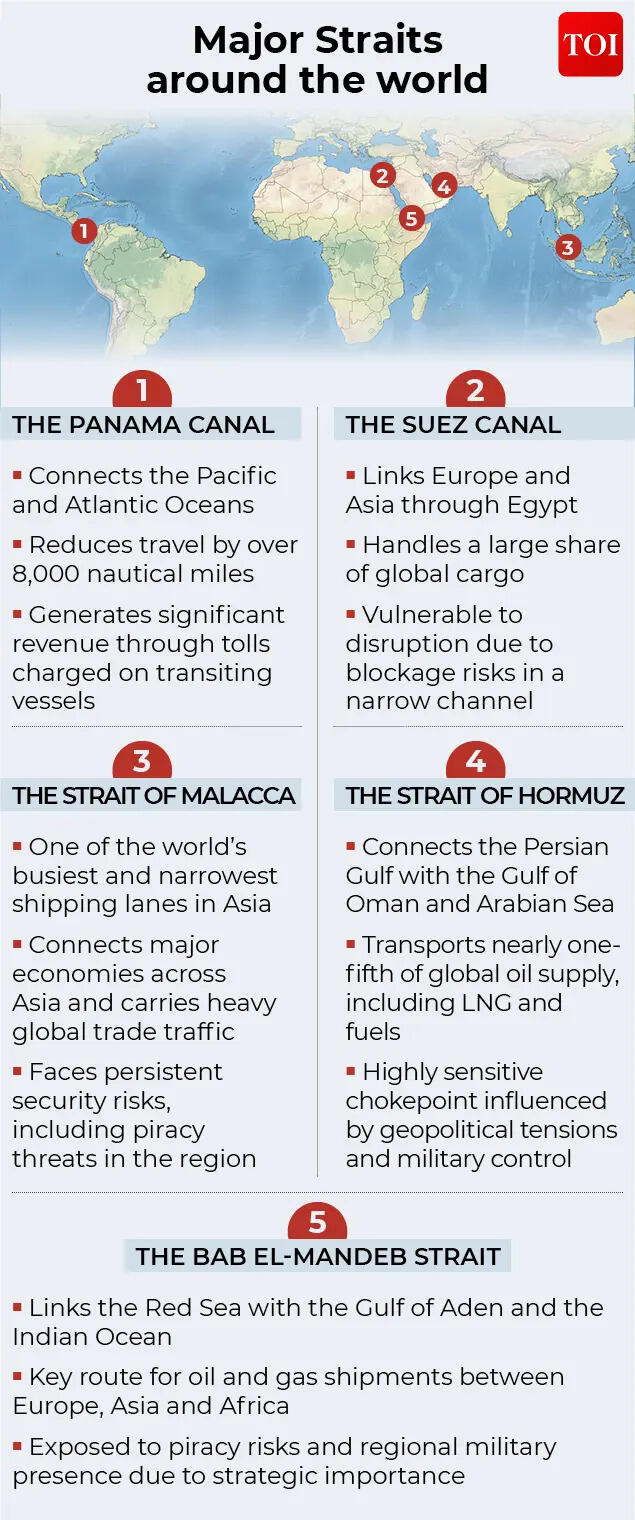
Maritime trade forms the backbone of global commerce, with approximately 80% of international goods moving through sea routes. Within this system, Straits play a critical role because they are narrow passages where global shipping is naturally concentrated and vessels passing through them can reach their destination in a shorter time.These chokepoints are economically important because even small disruptions can affect global supply chains. The Strait of Hormuz is one of the most crucial maritime chokepoints in the world, both geographically and economically.Apart from Hormuz, several other maritime chokepoints play a decisive role in shaping global trade flows. These narrow passages not only shorten travel time but also concentrate a large share of global shipping.
.
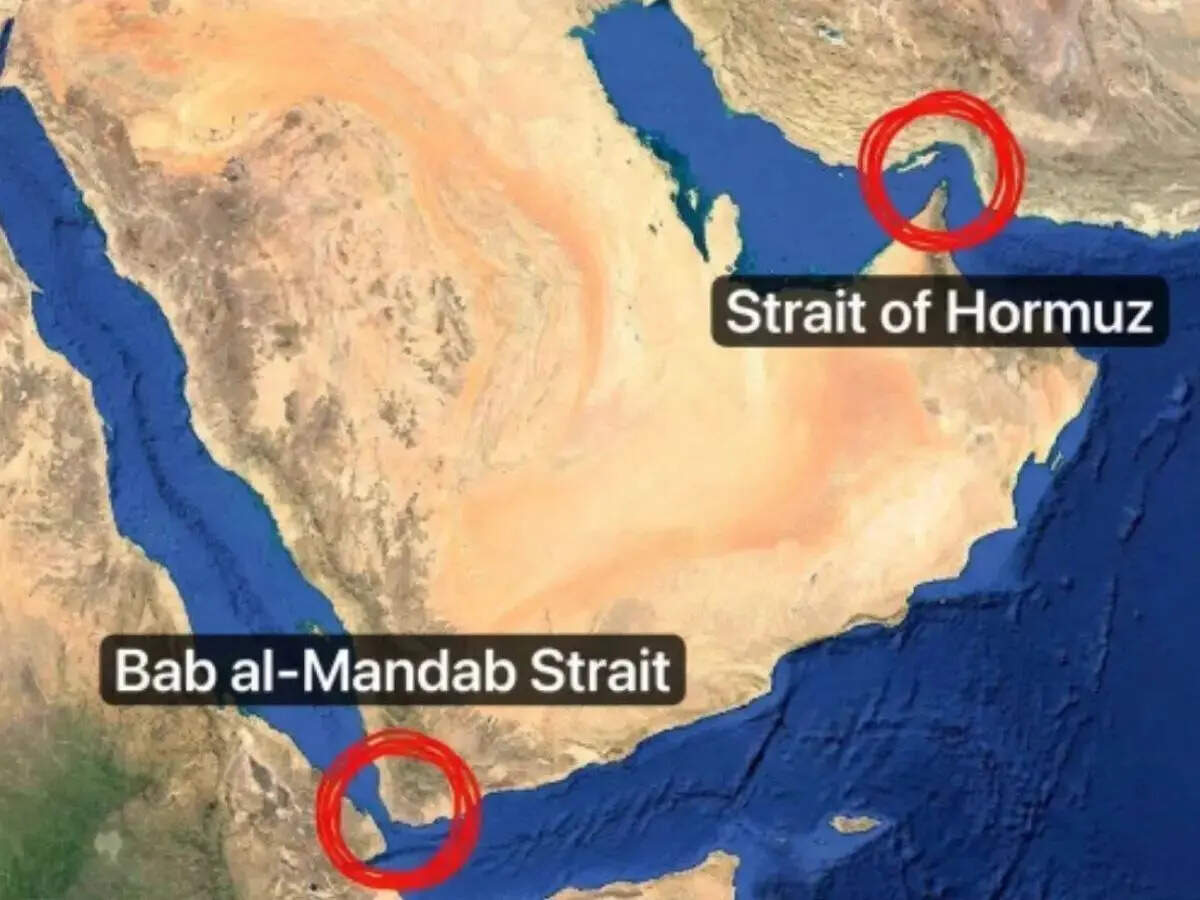
The Panama CanalThe Panama Canal connects the Pacific and Atlantic Oceans, offering a critical shortcut for vessels moving between the east and west coasts of the Americas. It reduces travel distance by over 8,000 nautical miles and can cut journeys by nearly three weeks. The canal also functions as a major revenue source, generating billions of dollars annually through tolls charged on passing vessels.The Suez CanalThe Suez Canal links Europe and Asia through Egypt, eliminating the need to sail around the southern tip of Africa. It significantly reduces transit time for global shipping and carries a substantial volume of international cargo each year. However, its operations have also shown how vulnerable such routes can be, with past disruptions highlighting the risks of congestion and blockage in a single narrow channel.The Strait of MalaccaThe Strait of Malacca is one of the busiest and narrowest shipping lanes in the world, connecting major economies across Asia. Despite its size, it handles a very high volume of global trade traffic. Its strategic importance is heightened by security concerns, including piracy risks, which continue to affect shipping operations in the region.The Bab el-Mandeb StraitLocated between Africa and the Middle East, the Bab el-Mandeb Strait links the Red Sea to the Gulf of Aden and the wider Indian Ocean. It is another key route for global oil and gas shipments. The area has also seen security challenges, including piracy threats and a growing military presence due to its strategic importance.
.
The importance of these maritime trade routes raises a crucial question: what does international law actually say about the right to control and charge for passage through such strategic waterways?Transit vs tolls: What global maritime law allows and where it falls shortThe United Nations Convention on the Law of the Sea (UNCLOS), which governs global ocean law, clearly states that straits used for international navigation must allow free and uninterrupted transit.Under this framework, countries bordering such straits cannot impose fees simply for allowing ships to pass through. They are permitted to levy charges only for specific services, such as piloting or tug assistance and even those must be applied uniformly without discrimination.However, enforcement of such laws remains complicated, particularly because neither Iran nor the United States has formally ratified UNCLOS, even though both have historically adhered to its principles.International law in maritime spaces largely depends on consensus and cooperation rather than strict enforcement mechanisms. While over 170 countries have ratified UNCLOS, its effectiveness relies on nations choosing to comply.The concept of charging for passage exists in global shipping, but only in specific contexts. Man-made canals like the Suez Canal in Egypt and the Panama Canal impose transit fees because they are engineered waterways maintained by the countries that operate them.Natural straits, however, are treated differently under international law. Passage through them is generally free to ensure smooth global trade.Even in cases like the Turkish straits, only limited service-related charges are allowed, not blanket tolls for transit.
Hormuz chokepoint: How conflict, control and toll plans could reshape global trade
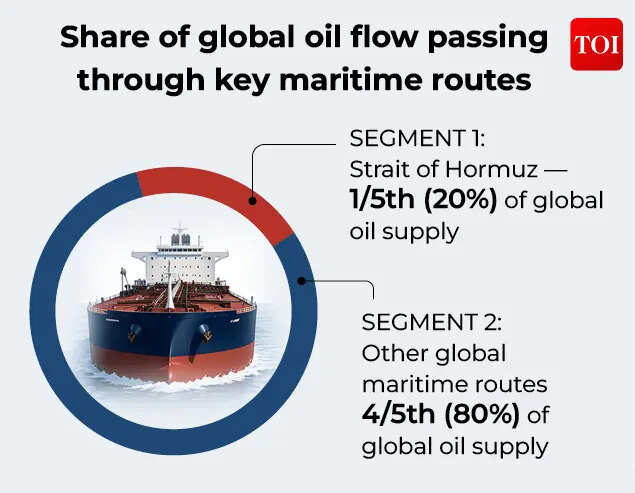
The Strait of Hormuz, controlled by Iran, connects the Persian Gulf with the Gulf of Oman and serves as a critical route for global energy supplies.At its narrowest, it is just about 34 kilometres wide, yet it carries nearly a fifth of the world’s oil supply. The waterway serves as the primary route connecting the oil-producing nations of the Gulf to global markets via the Indian Ocean.
.
Beyond crude oil, vital commodities such as liquefied natural gas and fertilisers also pass through this corridor, making it indispensable to global trade.Any disruption in this narrow stretch of water has immediate ripple effects across energy markets, often pushing prices higher and triggering supply concerns worldwide.What makes the maritime passage significant is how the ongoing Middle East war has pushed Iran to move beyond traditional control towards actively seeking to regulate and monetise this passage.Tehran is proposing a framework under which ships could be charged variable transit fees depending on cargo and conditions, while also potentially requiring permits or licences to pass.This comes after nearly two months of conflict that saw Iran tighten its grip on the waterway, restricting vessel movement and allowing only limited traffic. Reports of warnings, attacks and even unofficial payments for safe passage highlight how the Strait is already being used as leverage.By leveraging its position over a critical chokepoint, Iran could offset the impact of Western sanctions while gaining bargaining power over countries dependent on Gulf energy flows.In that sense, Hormuz is no longer just a transit route; it has become a focal point where conflict, commerce and control intersect, having higher repercussions on global trade.
Air routes: Overflight fees and emerging grey zones
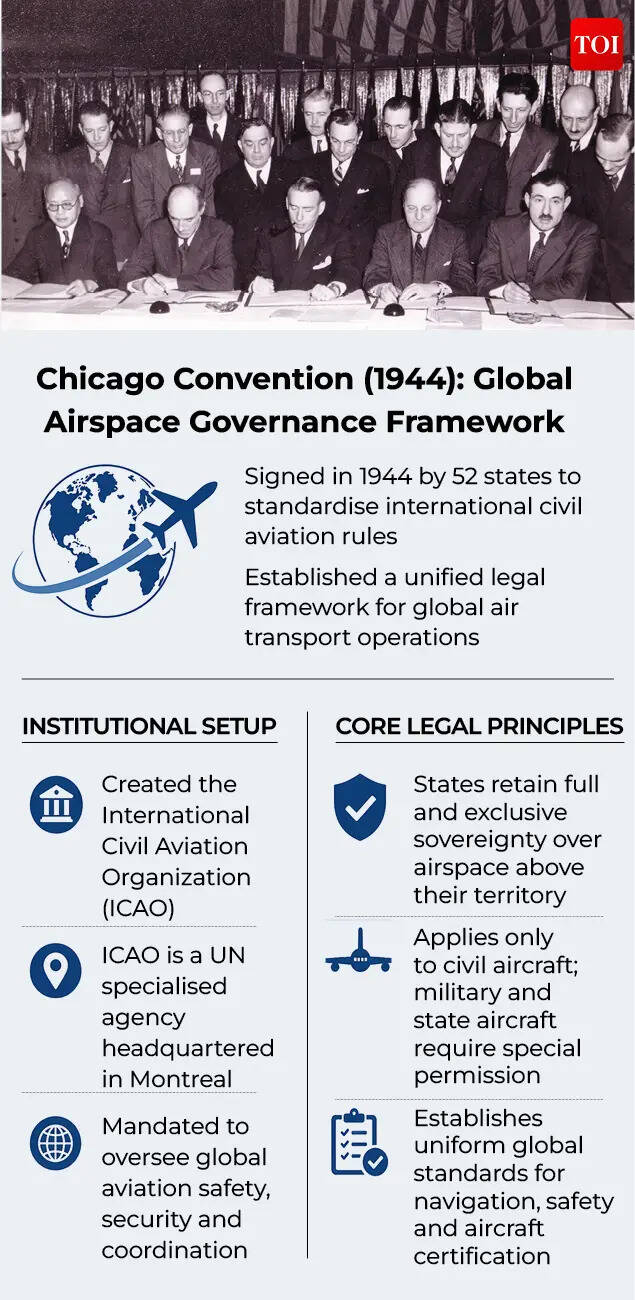
In aviation, the right to charge for using airspace is governed by long-established international rules under the Convention on International Civil Aviation.Countries have full sovereignty over the airspace above their territory, allowing them to levy charges for services such as air traffic control and route management.
.
These charges, however, are not meant to be arbitrary. They must be applied uniformly to both domestic and foreign carriers and should reflect the cost of services provided. In simple terms, a country cannot charge just for allowing an aircraft to fly over its territory, but it can recover the cost of managing and supporting that flight.In practice, airlines usually pay overflight fees through structured systems. These payments are often processed via international industry bodies or designated agencies that collect charges on behalf of states. This ensures transparency, standardisation and timely settlement across jurisdictions.However, recent disruptions in sanctioned or politically sensitive airspaces have shown how this system can break down when regular flying zones are closed or restricted.Following the closure of Pakistani airspace, Indian carriers have been forced to take longer westbound routes, increasing flight times and operational costs.Air India CEO Campbell Wilson in an interview to Bloomberg, said that the ongoing ban on using Pakistani airspace has increased flight times to several Western countries by an hour.In Afghanistan, financial sanctions and frozen state accounts have disrupted formal payment channels altogether. Airlines have had to rely on intermediaries to settle overflight fees, often without clear billing processes, creating operational uncertainty and raising broader compliance concerns, according to Reuters.
Land corridors: Fragmented and bilateral trade routes
Unlike air and maritime routes, land-based trade corridors operate without a single, widely accepted global framework that standardises how transit is priced or regulated.The movement of goods across borders by road and rail depends largely on bilateral or regional agreements between neighbouring countries.For landlocked developing countries, following these trade routes becomes essential. With no direct access to seaports, they rely on transit through neighbouring states to reach global markets. In most cases, land transit (whether by road or rail) is costlier than maritime shipping.Land corridors allow greater discretion to individual states. Governments can impose transit fees, customs duties, road usage charges or security-related costs, as long as these are defined within bilateral or regional frameworks.
.
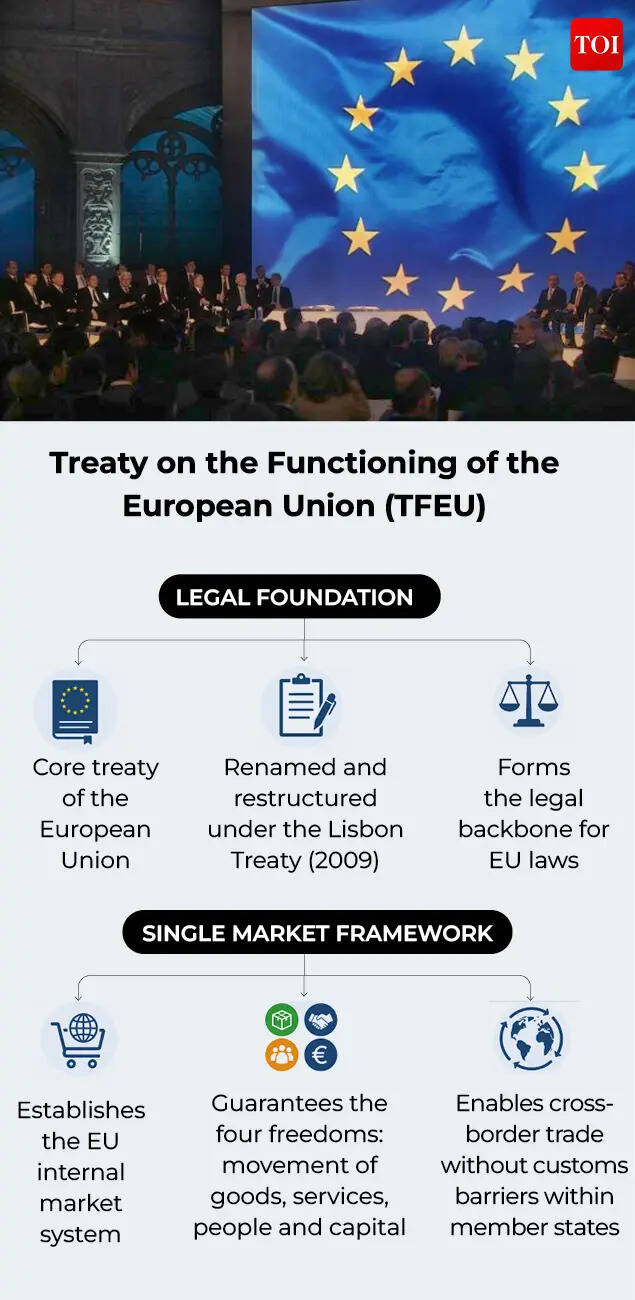
However, political instability or conflict in transit countries can lead to sudden route disruptions or additional restrictions.In comparison to air and sea routes, land corridors remain the least standardised, with rules that vary significantly from one border to another.By contrast, the European Union offers one of the most integrated land trade systems globally. Under the Treaty on the Functioning of the European Union, goods move across member states without customs duties or routine border checks, supported by harmonised regulations and mutual recognition standards.This creates a near-borderless trade zone that reduces delays and lowers transaction costs, with internal transit functioning more like a single market.
The bottom line
Global trade no longer moves through a uniform system of rules, but through a layered structure shaped by law, geography and political control. Air, sea and land corridors each follow different logics.While international conventions provide a baseline, enforcement and interpretation vary widely across regions.As global supply chains become more interconnected, even small disruptions in key routes can have disproportionate effects. The result is a trade imbalance that is functional but fragile, efficient in parts but inconsistent as a whole.