









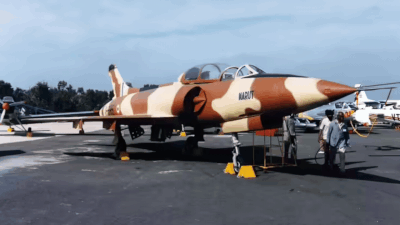
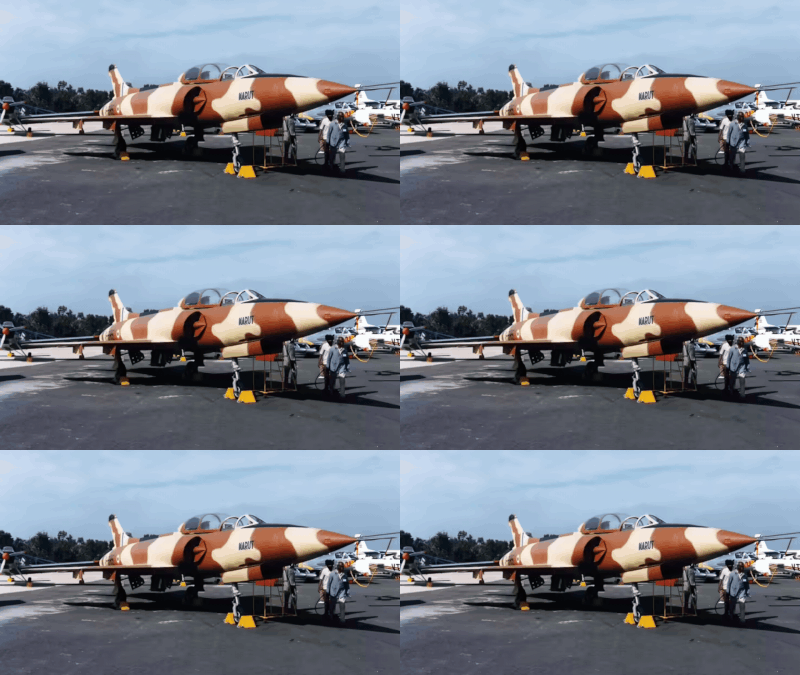
In 1956, independent India was just nine years old, and as a sovereign republic, the country was just five years old.As the country was finding its footing, former Prime Minister Jawaharlal Nehru authorised Hindustan Aeronautics Limited (HAL) to build a supersonic fighter aircraft. Until then, only the United States, the Soviet Union, the United Kingdom, and France had built supersonic aircraft.HAL brought in famed German aircraft designer Kurt Tank, known for his work on iconic World War II aircraft such as the Focke-Wulf 190 fighter, the Ta 152 high-altitude fighter-interceptor, and the Focke-Wulf 200 Condor airliner. Both the United States and the Soviet Union also recruited former German technical staff to expand their aviation and space programmes.Kurt Tank designed a sleek twin-engine aircraft capable of Mach 2 speeds, at least on paper. In June 1961, the first prototype took to the air, with Wing Commander Suranjan Das at the controls. Then IAF chief Air Chief Marshal AM Engineer, nuclear physicist Homi Bhabha, and Defence Secretary Reddy were among those who witnessed the first flight, which made India the first non-superpower nation to fly a supersonic-capable jet.Yet the promise of the Marut was undermined almost from the start by bureaucratic hesitation over its most critical component: the engine. The aircraft was meant to be powered by the Bristol Orpheus with afterburner, but the government refused to fund its development.
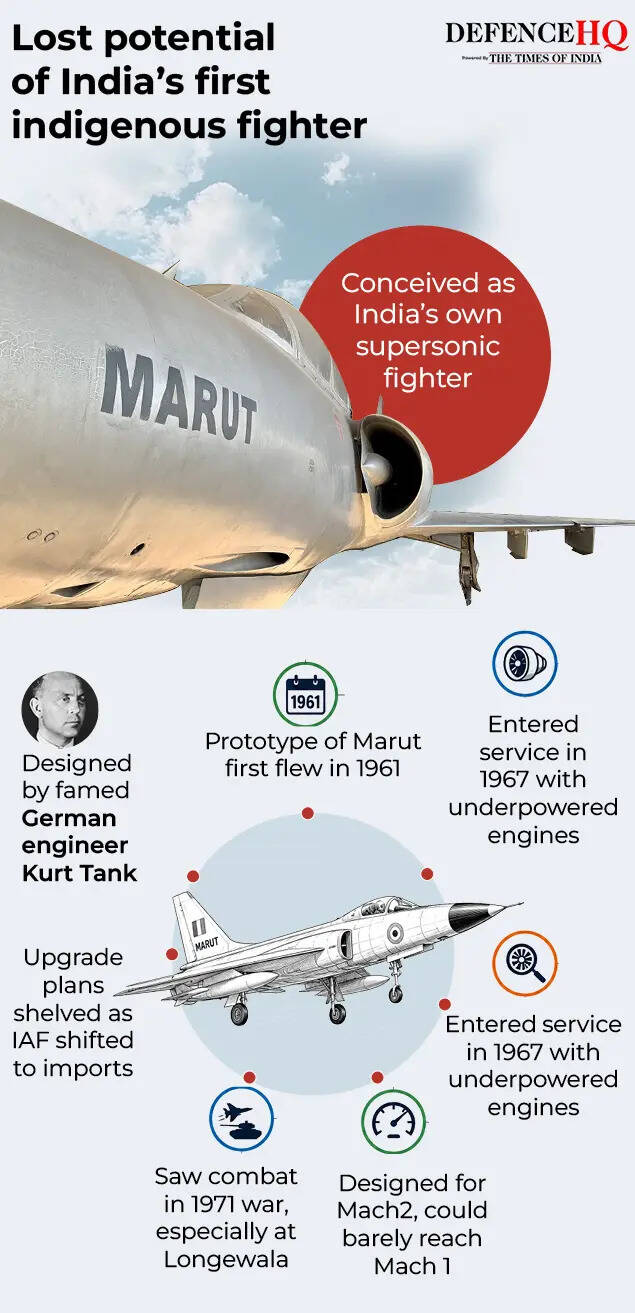
HAL searched for alternatives in Europe, the Soviet Union, and the United States, but political shifts and indecision blocked every deal. As a result, the Marut entered service in 1967 with non-afterburning Orpheus 703 engines, producing barely 4,850 pounds of thrust each against the 8,150 pounds originally envisaged. This left the fighter underpowered, unable to break past Mach 1 in level flight, and already outdated by the time it joined the Indian Air Force, according to The National Interest.Today, there are echoes of that story in the Tejas programme. This aircraft, too, continues to fly with the same engine family that powered its prototype.The Marut served in three Indian Air Force squadrons: No. 10 Squadron (Daggers), No. 31 Squadron (Lions), and No. 220 Squadron (Desert Tigers).Despite these limitations, the Marut proved its worth in combat. During the 1971 war with Pakistan, Maruts of No. 10 Squadron flew over 200 sorties. At Longewala, they strafed Pakistani tanks and vehicles bogged down in desert sand, destroying 22 tanks and more than 100 vehicles. Their contribution helped turn the tide of battle and demonstrated that even a compromised design could deliver decisive results when used effectively.Across the war, the Marut showed ruggedness, accuracy in ground attack, and reliability. It also reportedly downed a Pakistani F-86 Sabre. Only four aircraft were lost during the conflict, according to The National Interest.Yet the fighter’s future was doomed by the same bureaucratic inertia that had crippled its engines. Plans for upgraded variants with radar and missiles were shelved. The Air Force, frustrated by the lack of thrust, shifted to the Jaguar — an aircraft that also faced criticism over power limitations. Production costs mounted, and by the 1980s, the Marut was being phased out. The last aircraft retired in 1990.The Marut’s story is a cautionary tale. India had the design talent and the vision, but without decisive investment in propulsion, the aircraft was strangled before it could mature. It remains a symbol of how bureaucratic indecision can kill promising projects, leaving behind not just a forgotten fighter but a lost opportunity to shape India’s aviation trajectory.Now, too, the Tejas programme has faced significant delays due to powerplant-related issues and challenges in integrating critical systems into operational service. History may not repeat itself exactly, but it often rhymes. In Tejas’s case, delays in engine deliveries and systems integration continue to weigh on the programme.As aviation technology advances rapidly, the key question is whether the already delayed Tejas programme can keep pace.In 1956, independent India was just nine years old, and as a sovereign republic, the country was just five years old.As the country was finding its footing, former Prime Minister Jawaharlal Nehru authorised Hindustan Aeronautics Limited (HAL) to build a supersonic fighter aircraft. Until then, only the United States, the Soviet Union, the United Kingdom, and France had built supersonic aircraft.HAL brought in famed German aircraft designer Kurt Tank, known for his work on iconic World War II aircraft such as the Focke-Wulf 190 fighter, the Ta 152 high-altitude fighter-interceptor, and the Focke-Wulf 200 Condor airliner. Both the United States and the Soviet Union also recruited former German technical staff to expand their aviation and space programmes.Kurt Tank designed a sleek twin-engine aircraft capable of Mach 2 speeds, at least on paper. In June 1961, the first prototype took to the air, with Wing Commander Suranjan Das at the controls. Then IAF chief Air Chief Marshal AM Engineer, nuclear physicist Homi Bhabha, and Defence Secretary Reddy were among those who witnessed the first flight, which made India the first non-superpower nation to fly a supersonic-capable jet.Yet the promise of the Marut was undermined almost from the start by bureaucratic hesitation over its most critical component: the engine. The aircraft was meant to be powered by the Bristol Orpheus with afterburner, but the government refused to fund its development.HAL searched for alternatives in Europe, the Soviet Union, and the United States, but political shifts and indecision blocked every deal. As a result, the Marut entered service in 1967 with non-afterburning Orpheus 703 engines, producing barely 4,850 pounds of thrust each against the 8,150 pounds originally envisaged. This left the fighter underpowered, unable to break past Mach 1 in level flight, and already outdated by the time it joined the Indian Air Force, according to The National Interest.Today, there are echoes of that story in the Tejas programme. This aircraft, too, continues to fly with the same engine family that powered its prototype.The Marut served in three Indian Air Force squadrons: No. 10 Squadron (Daggers), No. 31 Squadron (Lions), and No. 220 Squadron (Desert Tigers).Despite these limitations, the Marut proved its worth in combat. During the 1971 war with Pakistan, Maruts of No. 10 Squadron flew over 200 sorties. At Longewala, they strafed Pakistani tanks and vehicles bogged down in desert sand, destroying 22 tanks and more than 100 vehicles. Their contribution helped turn the tide of battle and demonstrated that even a compromised design could deliver decisive results when used effectively.Across the war, the Marut showed ruggedness, accuracy in ground attack, and reliability. It also reportedly downed a Pakistani F-86 Sabre. Only four aircraft were lost during the conflict, according to The National Interest.Yet the fighter’s future was doomed by the same bureaucratic inertia that had crippled its engines. Plans for upgraded variants with radar and missiles were shelved. The Air Force, frustrated by the lack of thrust, shifted to the Jaguar — an aircraft that also faced criticism over power limitations. Production costs mounted, and by the 1980s, the Marut was being phased out. The last aircraft retired in 1990.The Marut’s story is a cautionary tale. India had the design talent and the vision, but without decisive investment in propulsion, the aircraft was strangled before it could mature. It remains a symbol of how bureaucratic indecision can kill promising projects, leaving behind not just a forgotten fighter but a lost opportunity to shape India’s aviation trajectory.Now, too, the Tejas programme has faced significant delays due to powerplant-related issues and challenges in integrating critical systems into operational service. History may not repeat itself exactly, but it often rhymes. In Tejas’s case, delays in engine deliveries and systems integration continue to weigh on the programme.As aviation technology advances rapidly, the key question is whether the already delayed Tejas programme can keep pace.