










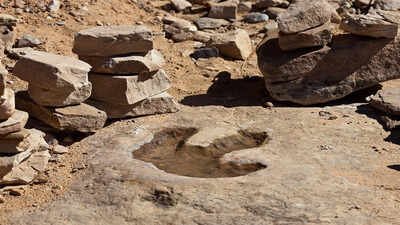
Some of the most awe-inspiring scientific discoveries have not been made through costly and technologically advanced laboratory experiments. In January 2021, a little girl by the name of Lily Wilder was taking a stroll with her family along the windy shores of Bendricks Bay in South Wales. While walking along the harsh shoreline, the little girl paused to examine an impressively large flat stone slab, which had an unusual indentation on its surface at her eye level.She excitedly showed her father the impression made by the three-toed footprint, which her father quickly photographed. They thought they had found something unusual, but they did not realise at all that it was due to the keen eyesight of a child that an extremely rare and intact relic from prehistory had been discovered.After the family alerted the local palaeontologists about their discovery, the pictures set off a series of excitement among scientists from all around the world. As reported by BBC News, the experts rushed to the site of the discovery and identified the indentation as a perfect 220-million-year-old dinosaur footprint. The object, which seemed to be nothing but an ordinary piece of stone to hurried adults walking past it, turned out to be a stunning geological wonder lying right under their feet.Interpreting the heavy footprints of prehistoric creaturesThe discovery became an object of great fascination since it gave a rare chance to take a look into the life of an animal that existed millions of years ago, before such dinosaurs as Tyrannosaurus Rex came into existence. In accordance with the detailed paleontological report published by the Natural History Museum, this particular discovery should be considered a trace fossil. Contrary to mineralised bones and teeth, trace fossils give information on the real-life behaviour and surroundings of prehistoric animals.The museum experts noted that the footprint was likely left by a slender, bipedal dinosaur that stood about twenty-five inches tall and utilised a graceful, predatory hunting style. This ancient creature was walking through a soft, muddy shoreline or mudflat when its foot pressed into the wet sediment.Before the impression had been washed off by water or weathered away due to the change in climate, the impression was quickly buried under multiple layers of sand and sediment. Millions of years later, the layers were compressed under tremendous amounts of pressure until they turned into rock, sealing in forever a snapshot in time from one afternoon stroll in the Triassic era.
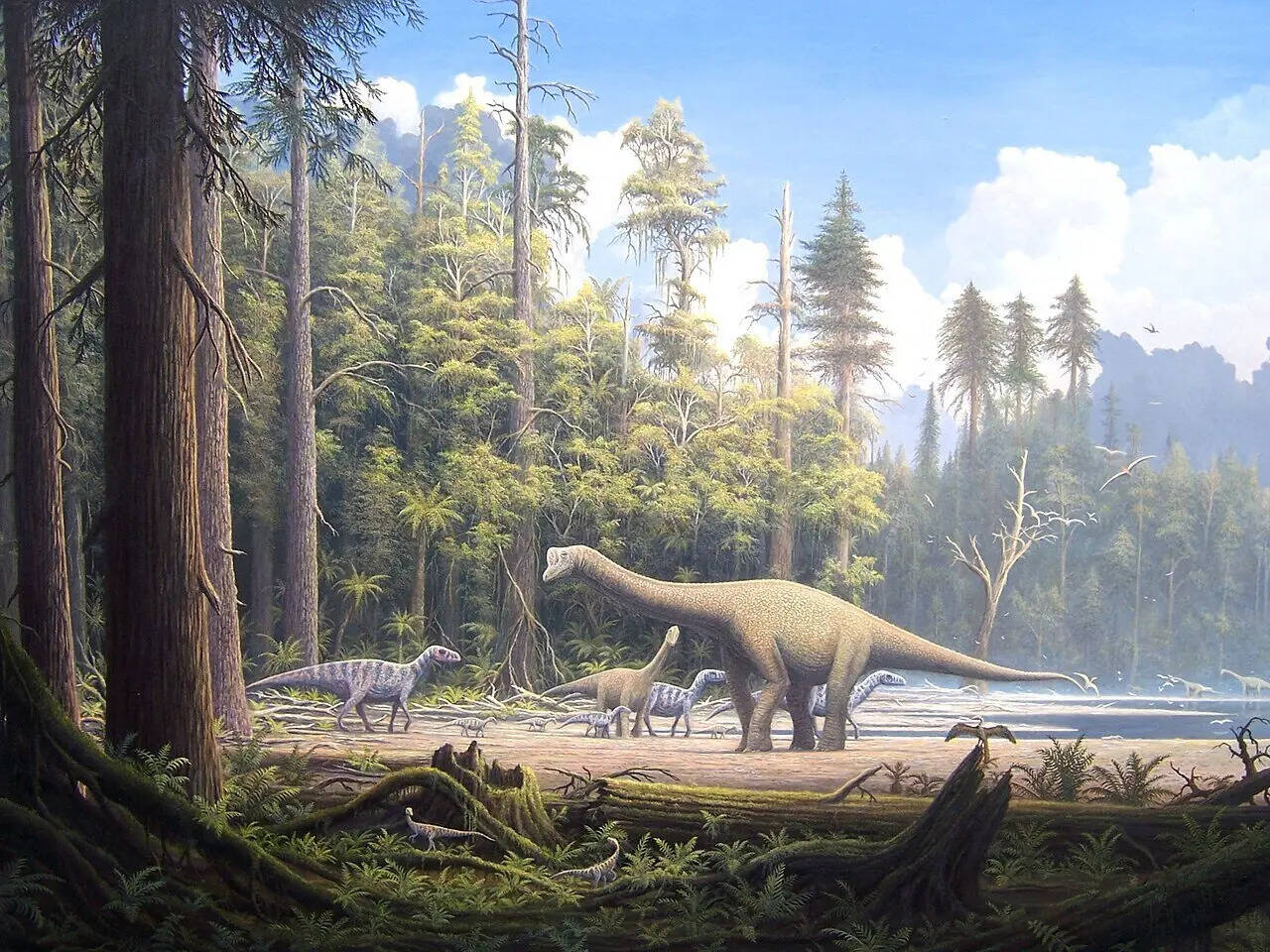
Scientists are studying the ancient track to understand dinosaur movement. The discovery emphasizes that important finds can be made through simple observation, reminding us of Earth’s deep history. Image Credits: Gerhard Boeggemann, via Wikimedia Commons
Understanding the body language of ancient predators through fossilised footprintsIn addition to the immense joy that comes from discovering something like that at a young age, the Welsh discovery has offered some very valuable information for today’s scientists who are studying prehistoric mechanics. As stated in Reconstructing dinosaur locomotion, footprints are highly sought after in the scientific world since they serve as tangible proof of an animal’s posture and gait.While a fossilised skeleton can show what a dinosaur looked like, a clear trackway reveals exactly how that dinosaur interacted with the physical world. The research explains that by measuring the precise depth, angle, and spacing of an individual print, scientists can accurately calculate the speed at which the animal was travelling, how its weight shifted across its toes, and how it navigated slippery or uneven terrain.Currently, the priceless rock slab has been extracted from the tidal area so that it can be protected from the erosion of the ocean and preserved at a national museum for research purposes. It is an excellent reminder of the fact that the earth still holds many mysteries that can be discovered by those who have patience and the desire to learn.As we walk along our present-day shorelines, hearing the sound of waves or looking for seashells, we share our time and space with the footsteps of animals that once ruled the planet millions of years ago. This goes to show that sometimes, the only way to discover the great mysteries of deep time is to look at things as a kid does.