









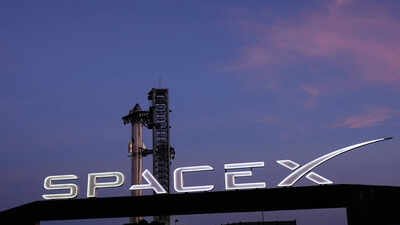

SpaceX is set for a rare and historic Wall Street debut, raising $75 billion in what could become the largest IPO ever. The listing is expected to value Elon Musk‘s rocket and satellite company at nearly $1.8 trillion.The listing marks a new chapter for the company that began more than two decades ago with ambitions of lowering the cost of space travel. Today, SpaceX spans rocket launches, satellite internet and artificial intelligence, even as mounting expenses continue to test its profitability.As investors prepare for one of the most closely watched stock market debuts in recent years, here are 10 key takeaways from the offering.
Blockbuster IPO
SpaceX said that it sold all 555,555,555 shares offered in the listing at $135 apiece. Based on those terms, the company is set to raise roughly $75 billion. The offering would surpass Saudi Aramco’s $29.4 billion listing in 2019, making it the biggest IPO ever.
World’s first trillionaire
A major portion of Musk’s fortune is now tied to SpaceX. His current stake in the company is estimated to be worth around $866 billion. Alongside his holdings in Tesla and other assets, his net worth is expected to exceed $1.1 trillion once SpaceX begins trading.
World’s first $2 trillion fortune too
Following the IPO, Musk is expected to retain ownership of about 42% of SpaceX. Although he cannot sell those shares for a year under the terms outlined in financial filings, the valuation of the company could substantially increase his paper wealth.Combined with a Tesla compensation package approved by shareholders last year, Musk could eventually move towards a net worth of $2 trillion over the upcoming years, according to ABC News.
Institutional investors are lining up
Demand for SpaceX shares has been unusually strong. According to a Wall Street Journal report, BlackRock alone sought to purchase at least $5 billion worth of stock. Other large fund managers also placed sizeable orders, surpassing the scale typically associated with public offerings.For comparison, Cerebras, the largest IPO prior to SpaceX this year, raised $5.55 billion in total.
SpaceX — more than a rocket company
Founded in 2002, the company has expanded well beyond launches. It operates Starlink, a satellite internet network supported by thousands of satellites in orbit.Earlier this year, SpaceX merged with xAI, Musk’s artificial intelligence venture. The company has described the deal as central to its ambition of creating “orbital data centers” capable of delivering computing power from space.
Behind the revenue growth
Financial filings showed that SpaceX generated $18.7 billion in revenue, representing growth of 33% from the previous year. Starlink accounted for a substantial share of that business, serving approximately 10.3 million users through 9,600 satellites.Despite the increase in sales, SpaceX reported a net loss of $4.94 billion. That followed a profitable 2024, when the company posted earnings of $791 million.
Retirement savers may soon own SpaceX shares indirectly
Changes to stock exchange rules could pave the way for SpaceX to join major indices sooner than newly listed companies previously could, ABC News reported.As many retirement accounts invest through index funds tracking benchmarks such as the Nasdaq and S&P 500, SpaceX may quickly become part of 401(k) portfolios.
SpaceX launches
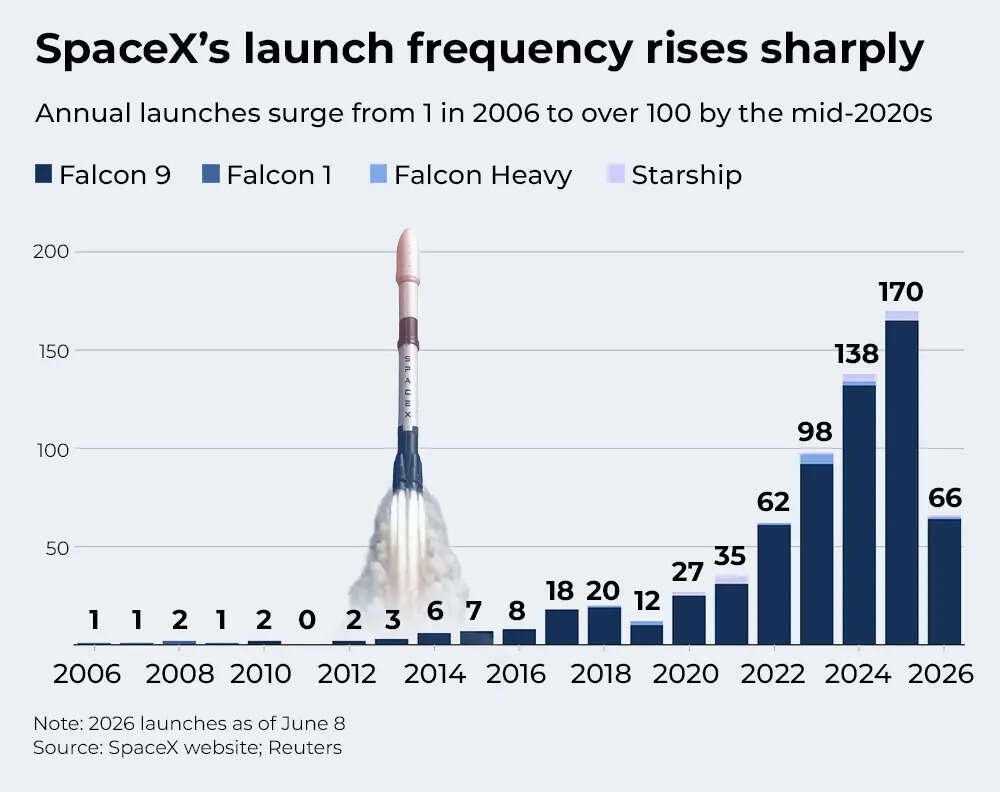
SpaceX has gone from carrying out a single launch in 2006 to conducting more than two launches each week, according to Reuters. That frequency has helped secure its position as a launch provider for both Nasa and the Pentagon.
Falcon rockets remain at the heart of operations
The reusable Falcon 9 rocket continues to underpin much of SpaceX’s business. Falcon Heavy, built using three Falcon 9 boosters, is capable of lifting 64 metric tonnes into low-Earth orbit and is used for military and deep-space missions.Meanwhile, Starship remains under development as SpaceX pursues larger-scale human and cargo transportation capabilities.
AI is a growing priority
SpaceX has identified AI as one of its biggest opportunities following the integration of xAI into the business.Yet adoption of xAI’s services remains relatively limited compared with competitors. According to a report by finance startup Ramp, more than 30% of its business customers were paying for products from Anthropic and OpenAI in April, while xAI’s adoption rate stood at around 5%.