









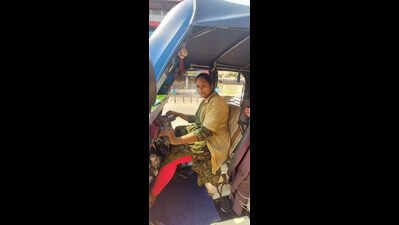
Mangaluru: As debates on women’s reservation, workplace rights and menstrual leave gather momentum nationally and in Karnataka, Sumangala’s daily struggle reflects the distance between policy and pavement reality. For Sumangala, 44, an auto driver, empowerment is just a slogan as she faces harsh conditions during a 12-hour shift on the road.A single mother of four — two children in college and two in school — Sumangala spends her days navigating Mangaluru’s streets in an electric autorickshaw, working from 9am to 7.30pm to keep her household running.“I have responsibilities. Rent, electricity bill, fees and food. Whenever I feel like giving up, harsh realities remind me to keep going,” she said.Sumangala, who has studied till SSLC, has been driving for eight years, first operating a gas-powered autorickshaw used for school trips. But after an accident, rods were inserted in both her hands, changing gears became difficult. She sold the old vehicle and shifted to an electric rickshaw four years ago, availing a 75% subsidy through a Mahindra showroom scheme.The switch to cleaner mobility has brought its own costs. Charging costs are a burden. “A full home charge costs around Rs 50 over four hours, while commercial EV charging stations charge Rs 45 for just one hour. So, I try to finish my day’s rides before needing a top-up charge,” she said.Business is slow during summer vacations. Waiting at autorickshaw stands in Balmatta, or near hospitals for 15-20 minutes may fetch only a Rs 35 ride. “If we wait, battery charge also gets wasted. It is better to keep moving,” she said.Five or six women e-rickshaw drivers work in the city, who are amid a gradual rise in women auto drivers across the state. Sumangala said so far, women empowerment schemes to subsidise or help her business have not reached her yet.