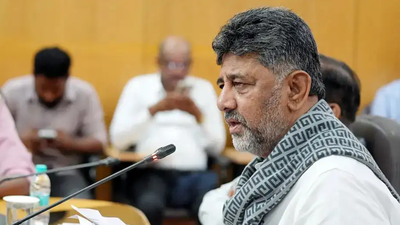










Footpaths Cleared, But Where Should Vendors Go? A Decade After Street Vendors Act, Bengaluru Has No AnswerBengaluru: As Bengaluru’s five city corporations intensify footpath clearance drives under the Greater Bengaluru Authority’s Safe Footpath initiative starting Wednesday, a fundamental question remains unanswered: where should thousands of street vendors displaced from footpaths earn their livelihood?While the government says vendors can move away from arterial roads and operate on inner roads, the suggestion raises fresh concerns. Most sub-arterial and residential roads have narrower footpaths than arterial roads and, in many cases, no usable footpaths at all. If vendors are pushed onto these roads, does it mean pedestrians on inner roads do not deserve safe walking spaces? Experts argue that footpath safety cannot be selectively enforced only on major roads while ignoring conditions on neighbourhood streets.A Decade Of Evictions, But No Lasting SolutionFor years, eviction drives have followed a familiar cycle. Civic authorities remove vendors citing pedestrian safety and encroachments, only for many of them to return days or weeks later. While authorities often blame vendors for reoccupying footpaths, vendors argue they have nowhere else to go.The recurring cycle points to a deeper issue — Bengaluru has never fully implemented the Street Vendors (Protection of Livelihood and Regulation of Street Vending) Act, 2014, which was meant to balance pedestrian rights with the livelihoods of vendors.The Act mandates surveys of street vendors, formation of Town Vending Committees, issuance of vending certificates and scientific identification of vending zones. It also requires local bodies to calculate carrying capacity and earmark designated spaces where vendors can legally operate.The objective of the law was not to eliminate street vending but to regulate it.What The Government Has Done So FarThe then BBMP conducted a large-scale survey and identified nearly 30,000 vendors across Bengaluru. Officials had also identified more than 230 potential vending zones containing around 7,000 vending spots.However, the process remained incomplete. Not a single vending zone has been officially notified. Not a single vendor has received a vending identity card under the latest survey exercise. Town Vending Committees — the statutory bodies meant to oversee vending-related decisions — have not been constituted.The transition from BBMP to the Greater Bengaluru Authority and the creation of five city corporations appears to have stalled whatever progress had been made.Promises That Never MaterialisedOver the years, several announcements were made to address the issue.Chief Minister DK Shivakumar had earlier spoken about providing mobile vending vehicles to vendors so that they could continue their trade without permanently occupying footpaths. Budgetary allocations were also announced. Rs 42 crore budget was allocated for the same. However, vendors say the proposal never moved beyond the announcement stage.Similarly, the exercise to identify vending zones and issue identity cards has remained incomplete despite repeated assurances.The New Formula: Move To Inner RoadsThe issue resurfaced after Bengaluru Development Minister Krishna Byre Gowda announced a citywide drive to clear footpaths and arterial roads.When asked where vendors should go, Gowda told TOI that vendors could operate on inner roads instead.“They can vend on inside roads and avoid all the main roads. About vending zones, all inside roads are vending zones only, right? They should at least make the arterial road footpaths free.”However, planners point out that the Street Vendors Act does not permit vending zones to be declared informally. Vending zones must be scientifically identified based on road width, pedestrian movement and carrying capacity.The larger concern is whether shifting vendors from arterial roads to smaller neighbourhood roads merely transfers the conflict from one set of pedestrians to another.Questions That Need AnswersIf nearly 30,000 street vendors were surveyed, why has not a single vending zone been officially notified?What happened to the exercise that identified over 230 vending zones and nearly 7,000 vending spots?Why have no vending identity cards been issued?Why have Town Vending Committees not been constituted?If vendors are removed from arterial roads, where exactly are they expected to go?Does shifting vendors to inner roads solve the problem or simply move it elsewhere?Are pedestrians on sub-arterial and residential roads not entitled to safe, obstruction-free footpaths?What happened to the proposal and budgetary allocation for mobile vending vehicles?