
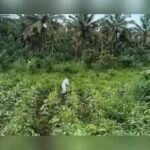








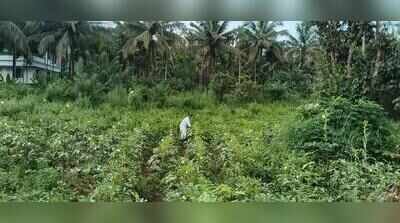
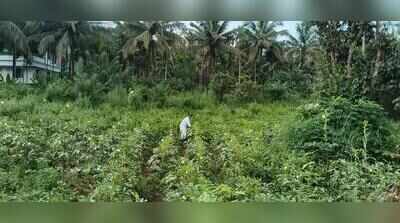
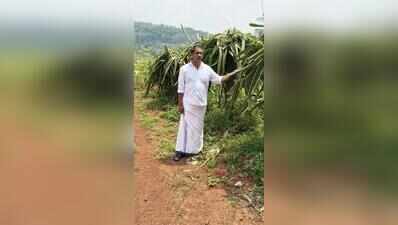
Mangaluru: Where most saw a stubborn stretch of barren laterite land, Vismaya Karunakar saw an opportunity to grow. This progressive farmer from Kuttikol village in Keralam along the Keralam-Karnataka border has transformed an almost unproductive landscape into a thriving agricultural ecosystem.According to Karunakar, the transformation did not come easy. The land was covered by hardened laterite, with highly acidic soil, poor organic carbon content, and little capacity to retain moisture. Conventional cultivation offered few possibilities. Karunakar chose a different route. Instead of trying to break through the hard ground, he decided to create fertile pockets above it.Senior scientist and head of ICAR-KVK, Dakshina Kannada, TJ Ramesha and Mallikarjuna L, scientist-soil science and senior scientist visited his farm recently and documented his progress.Mallikarjuna said that Karunakar transported hundreds of loads of fertile soil using his own resources and strategically placed hundreds of discarded plastic barrels across the rocky terrain. Filled partly with soil and compost, these containers became growing spaces for hundreds of trees, including fruit-bearing varieties. What began as an experiment in land reclamation has evolved into a diversified farming enterprise. Alongside horticulture, Karunakar rears around 8,000 poultry birds, integrates livestock and organic waste management, and uses farm residue to produce compost. He has also taken up the conservation of traditional rice varieties, inspired by Padma Shri awardee Satyanarayana Beleri and maintains several medicinal plant species.He has grown a wide range of vegetables and fruits including banana, dragonfruit, sweet potato and 30-40 varieties of chilli. He has been cultivating rice on leased land. Local villagers, Peoples Cooperative Arts and Science College, Munnad and well-wishers have been supporting him by donating plastic barrels or drums for tree planting. In recognition of their contributions, donors’ names were inscribed on individual barrels, creating a personal connection between the community and the growing trees. Hundreds of trees have now been established, several of which have started flowering and bearing fruits.TJ Ramesha said the initiative demonstrates how farmer-led innovation and an integrated farming approach can turn challenging land conditions into opportunities. Such interventions also offer scope for improving organic matter, microbial activity and moisture retention over time, he noted.Mallikarjuna L said scientific assessment of the initiative could help establish its long-term impact on soil health and the biological properties of lateritic land. Karunakar’s initiative goes beyond agriculture. Through ‘Mannu Mattu Manassu’ (Soil and Soul), he seeks to bring together farming, biodiversity conservation and community participation. From nurturing hundreds of trees to sustaining a large poultry enterprise and conserving traditional crops, his journey offers a compelling lesson in resourcefulness, he said.