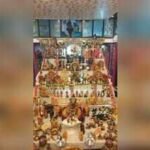






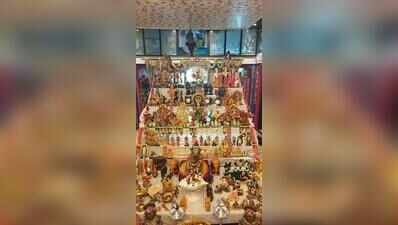
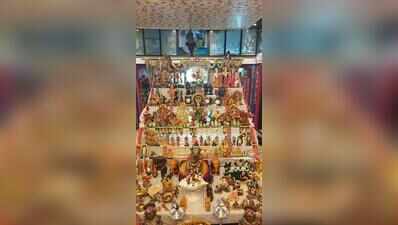
Mangaluru: More than 1,000 Dasara dolls, collected over four decades, have found a home this year at an octagonal farmhouse at Sujna Farms in Karinka, Anantady village of Bantwal taluk. The collection brings together scenes from mythology and history, temples and everyday life.Jnaneshwari S Joshi, who holds a PhD in zoology, began celebrating Dasara gombe habba at her Puttur residence six years ago after seeing a doll display in Mysuru. The tradition is common in Mysuru, Hassan and Bengaluru, as well as parts of Tamil Nadu, though elaborate displays remain relatively uncommon in Dakshina Kannada and Udupi districts.This year, Jnaneshwari and her husband, Subramanya S Joshi, arranged the collection at their farmhouse, Chithritha. Built eight years ago, the house has a distinctive octagonal design and colourful interiors.
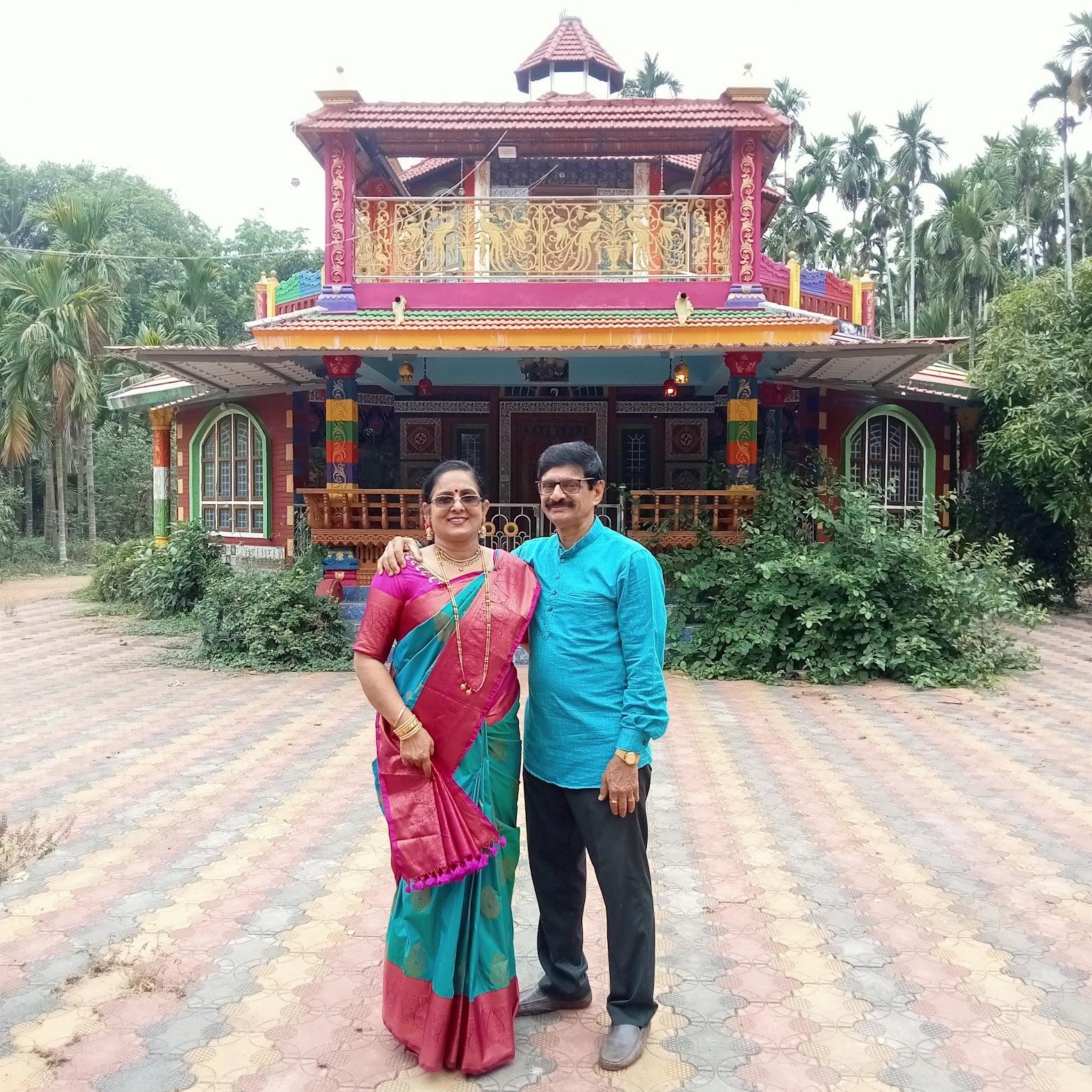
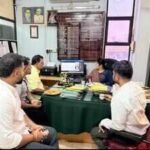
Jnaneshwari S Joshi and her husband Subramanya S Joshi outside their octagonal farmhouse, Chithritha
The dolls were collected over the years during family trips and visits to exhibitions, temples and other places, including Mysuru, Bengaluru, Thanjavur, Sringeri and Udupi. The couple spent more than four months shifting and arranging them by hand across the hall, two bedrooms and adjoining sit-out areas.The collection unfolds through several themes: the Ramayana, Dashavatara, Krishna and Radha, Kalinga Mardhana, Samudra Manthana, Mysuru Dasara and the Sringeri Sharada Peetham. There are also representations of temples in Ayodhya and Tirupati, Karnataka’s historical warrior queens, saints and literary figures, alongside scenes of village and city life and different stages of human life. A Jungle Book arrangement forms another theme.The Ramayana sequence traces Rama’s story from his birth and childhood through Jatayu Moksha, the bridge to Lanka, Lanka Dahana and Ravana, and extends to Lava and Kusha. In another section, a motorised mechanism brings the Samudra Manthana, or churning of the ocean, to life.Speaking to TOI, the couple’s son, Dr Vihar S Joshi, an orthopaedic specialist at KMC, Mangaluru, said his mother had spent more than 40 years collecting dolls, often seeking distinctive pieces available only in certain places. Some are difficult to find in regular markets or online. Her interests also include singing, dancing, art and rangoli.For the family, the festival remains a personal tradition and passion rather than a commercial exhibition. The display also tells the story of the effort involved in procuring the dolls and their significance. During the nine days of Dasara, the Goddess is worshipped daily and dressed in a new saree each day, Dr Vihar said.Relatives, friends and local residents visit the farmhouse during the festivities to view the displays and participate in the celebrations.