









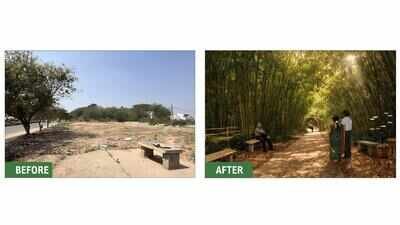
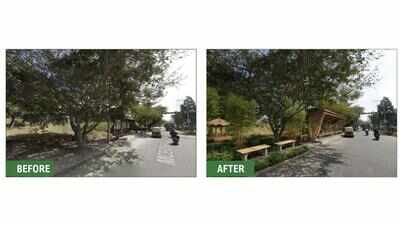
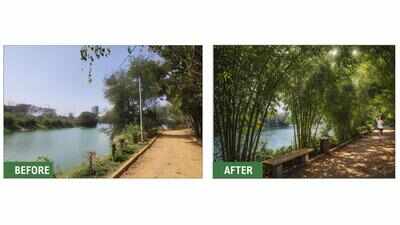
Bengaluru: An architect’s idea of using the humble bamboo to save a city is slowly taking shape in Ward 17 of Jakkur.The bamboo city project by Neelam Manjunath of Centre for Green Building Materials and Technology and Manasaram Architects proposes planting one bamboo per resident and including 30% bamboo in any construction. The ultimate aim is to make Bengaluru a carbon-neutral city by 2035 and regenerative thereafter. The first step starts at Jakkur.CGBMT has signed an MoU with Bengaluru North corporation. A fund of Rs 1.6 crore was released in June for plantation, soil preparation and maintenance for a year. Drawings have been done, DPR is ready, underused spaces in Jakkur — including vacant plots, roadside edges, parks, stormwater drains and lake surroundings — have been identified.Jakkur has around 28,000 residents and 1,926 acres of area, with 8 parks, 13 green patches, 2 lakes and 4 canals that face heat, flooding and pollution pressures. Around 47 sites of 5,09,705sqm are also identified where bamboo can help restore soil and microclimate. It’s a ward where climate impacts are visible, but where local action can still turn things around, the firm realised.The area already has 2,000 bamboo plants. Another 26,000 will be planted. “The corporation will plant bamboo. Our organisation will look at the technical part and operational support, and help the community take ownership. After five years, bamboos will be ready for harvest. It is not just about the carbon credit, but also about the livelihoods it can generate,” said Prof Neelam Manjunath.“Jakkur is the first ward-level model. Insights from its mapping, planting and maintenance will be used to improve ward-by-ward planning in other parts of Bengaluru. The aim is to move the city towards the long-term goal of a carbon-neutral and regenerative city,” she added.Why Bamboo city?Cooler neighbourhoods as bamboo can reduce local temperatures by about 4-5C in planted areasBetter air as bamboo plants absorb carbon dioxide and reduce dustStronger water and soil as roots help hold soil around lakes and canals, support groundwater recharge and fight erosionOver time, bamboo can supply material for local products and construction, creating jobsWhy bamboo:Faster growth. While a tree takes 20-30 years to mature, bamboo reaches full size in 3-5 years.Bamboo is stronger than many types of wood and can be used to build earthquake-resistant structuresRegenerates on its ownAbsorption of 400kg of CO2/plant/yearRelease of 300kg of O2/plant/year; produces 35% more oxygen than traditional treesRhizome roots fold the topsoil together and prevent soil erosionCreates a microclimate condition with a reduction of 4-5 degrees in temperatureRetain and increase the water table by holding up to 5,000 litres of water per bambooSource: CGBMT