












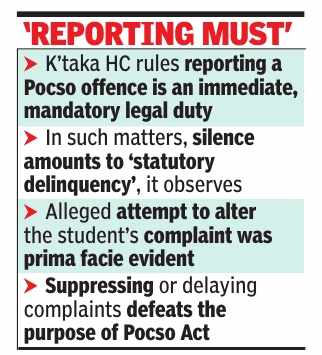
BENGALURU: Karnataka high court has refused to quash proceedings against the headmaster, assistant headmaster and child welfare officer of a private English-medium school in Moodbidri, Dakshina Kannada (DK) district, in a Pocso case, observing that silence in such matters amounts to “statutory delinquency”.The case against the three school officials is based on the allegation that they had failed to report a sexual offence against a student at their institution — an omission punishable with imprisonment of up to six months.
Reporting must
Issue not taken seriously though accused confessed: Complaint
In a judgment dated July 2, Justice M Nagaprasanna observed that educational institutions are not merely centres of instruction, but are entrusted with the safety, dignity and well-being of children. Once an incident under the Pocso Act comes to notice, the statutory obligations under the law immediately come into effect, he said.According to the complaint, in June 2026, a class 10 student was allegedly sexually abused by one of his roommates in the hostel. The victim informed the warden.The complaint alleged that the accused school officials neither treated the matter seriously nor recorded the statements of witnesses. It further alleged the child welfare officer made him write another complaint, stating no sexualoffence had occurred and that the complaint had arisen out of a quarrel between the two boys. The victim’s parents were also not informed, despite the accused allegedly confessing to the offence.The matter came to light on June 8 when the school initiated action against the victim for allegedly possessing a mobile phone. The boy then informed his father about the alleged sexual assault, followingwhich a police complaint was filed. The petitioners contended that the alleged incident occurred at midnight between two private individuals and they had no knowledge of it.The judge clarified the seriousness of the offence cannot be judged merely by the relatively lower punishment prescribed for failing to report it, and held that the materials on record disclosed a prima facie case against the petitioners.