










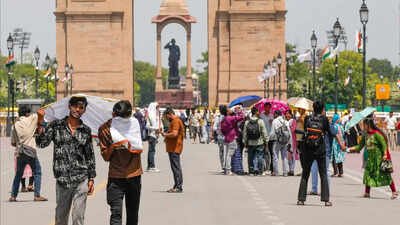
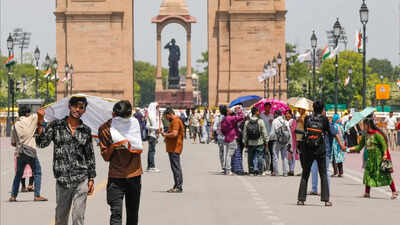
A new United Nations climate report has warned that the worst may still lie ahead for India and the world as temperatures in Rajasthan soared to 48.2°C on Wednesday and heatwave conditions gripped large parts of northern and central India.The World Meteorological Organisation (WMO) projected this week that there is a 75 per cent chance that average global temperatures between 2026 and 2030 will exceed 1.5 degrees Celsius above pre-industrial levels: the threshold set by the 2015 Paris Agreement as the limit of safe warming. There is also a 91 per cent chance that at least one of the next five years will breach that mark individually, and an 86 per cent chance that one of those years will surpass 2024’s record as the hottest year ever measured, as reported by the AP.UN climate chief Simon Stiell, responding to the WMO report, said that “the baking temperatures in Europe, India and elsewhere show yet again the brutal human and economic impacts of humanity still burning colossal amounts of coal, oil and gas.” He warned that “every nation is already paying a huge price from this global climate crisis.”The timing of the report feels immediate for Indians currently facing a brutal pre-monsoon summer. India’s Meteorological Department (IMD), in its All India Weather Summary and Forecast Bulletin issued Wednesday morning, warned that “heat wave to severe heat wave conditions” are very likely at isolated places over East Madhya Pradesh and Vidarbha, with severe heat wave conditions also gripping parts of West Rajasthan, where Sriganganagar recorded the country’s highest maximum temperature of 48.2°C on Tuesday.According to the IMD bulletin, “heat wave conditions very likely in isolated/some pockets over Punjab, Haryana, Chandigarh & Delhi, Uttar Pradesh on 28th,” with West Rajasthan facing “severe heat wave conditions in some pockets” on the same day.The bulletin further noted that maximum temperatures across Northwest India are expected to fall by 6-8°C between May 28 and 30, as thunderstorm activity intensifies but only briefly. Temperatures are forecast to rise again by 4-6°C between May 31 and June 2.Imperial College London climate scientist Friederike Otto said that a full year or more above the 1.5-degree mark “means a whole range of extreme weather events, probably many so hot, wet, or dry that it exceeds anything we’ve experienced in the past and thus, crucially, anything our city planning, agriculture etc. has anticipated.”The IMD bulletin urged farmers across Uttar Pradesh to “provide frequent irrigation and mulching for standing crops such as maize, green gram, black gram, sugarcane, sunflower, vegetables, and fruit plants such as mango, banana, and papaya.” It also flagged that the extreme heat will not go unaccompanied. Thundersqualls with wind speeds reaching 80–90 kmph gusting to 100 kmph are forecast over Punjab, Haryana, Chandigarh, Delhi and West Uttar Pradesh on May 29, the kind of violent weather swings that scientists say will become more common as the planet warms. Isolated hailstorm activity is expected across Himachal Pradesh, Uttarakhand, Punjab, Haryana, Delhi and West Uttar Pradesh on May 28 and 29. Dust storms are also forecast for Uttar Pradesh and Rajasthan on both days.The WMO’s five-year outlook warned that “a hotter globe from the burning of coal, oil and gas means more extreme weather including floods, droughts and heat waves.” The pattern is already manifesting across India in a single week: scorching heat in the north and west, intense rainfall and thunderstorms across the northeast and east and a southwest monsoon that, while advancing, has yet to bring relief to the most heat-stressed regions.The IMD bulletin noted that “conditions are favorable for further advance of southwest monsoon into some more parts of southwest and southeast Arabian Sea, Lakshadweep area, southwest, eastcentral and westcentral Bay of Bengal” over the next two to three days but for states like Rajasthan, Madhya Pradesh and much of the Indo-Gangetic plain, monsoon onset remains weeks away.