





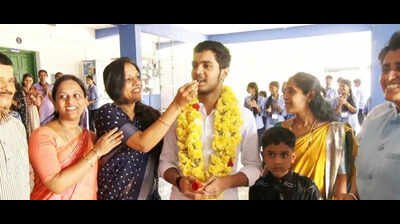
Mangaluru/Karwar: The coastal belt has once again set the benchmark in the SSLC examinations, with Dakshina Kannada, Udupi and Uttara Kannada retaining the top three positions in the district-wise rankings for 2026, this time with even sharper gains.Dakshina Kannada emerged as the state topper with an impressive 98.4%, a significant jump from 94.4% last year. Close on its heels, Udupi secured the second spot with 98.1% (93.9% last year), while Uttara Kannada followed with 98%, up from 90%.The standout improvement, however, came in Dakshina Kannada’s drastic reduction in failures. Of the 27,207 students who appeared for the exam, 26,771 cleared it, leaving only 436 unsuccessful candidates—a sharp drop from the 2,341 failures recorded last year.Dakshina Kannada DDPI GS Shashidhar attributed this turnaround to a focused strategy targeting slow learners. “We are happy with the increase in pass percentage and the steep drop in failures. My focus after taking charge in Aug was on students who struggle academically. High performers usually manage on their own, but we identified those who lacked support, had low learning levels, or had failed multiple subjects,” he told TOI.Beginning in Nov, the department rolled out a targeted intervention. Subject teacher forums of every taluk met online to design simplified learning packages aimed at helping students secure pass marks. The material was prepared for six subjects by assistant teachers and shared digitally with 622 schools in the district. “Slow learners were trained using these materials, and that made a significant difference,” he said.Students were also given extensive practice using model question papers released by the board. Despite additional responsibilities such as caste census duties and related training for the ongoing census, teachers ensured sustained academic support. “Our preparatory exam results were not encouraging, and both the DC and ZP CEO had raised concerns. But we were confident of improving in the final exam,” Shashidhar added.Ground-level approach in UdupiIn Udupi, a similarly intensive, ground-level approach paid off. DDPI Lokesh C said regular school visits and constant motivation were key. “There is always pressure to perform in districts like Udupi that consistently rank high. Our teachers worked with great sincerity, often beyond stipulated working days,” he said. The district used multiple academic tools, including an e-magazine developed through DIET and shared with students, SDMCs and parents. Subject-wise resource teams prepared daily questionnaires, while DIET faculty and education officials conducted frequent school visits.Some schools, particularly in Karkala, even organised night classes to support students. “Even when there was confusion regarding the Hindi subject, students remained calm, which worked in their favour,” Lokesh noted. Regular Google Meet interactions with HMs, continuous review of preparatory exam results and systematic use of board question papers further strengthened the preparation process. Out of 13,373 students who appeared for the exam, 13,129 passed, while 244 did not clear it.Uttara Kannada shinesUttara Kannada district has delivered an impressive performance in the SSLC examinations, securing the third position in state. Whereas the Sirsi education district stood in sixth position in the state with a passing percentage of 97.2%. Dishant Dayanand Naik of Dr AV Baliga English Medium School in Kumta has secured second place in the state. Out of 199 high schools in the district, as many as 134 schools recorded 100% results, showcasing the collective effort of students, teachers and administrators. Among the taluks, Honnavar stood out with the highest performance, closely followed by Bhatkal and Ankola. Kumta and Karwar also delivered commendable results, maintaining high pass percentages. Notably, students from govt schools performed exceptionally well, with top rank holders emerging from Karnataka Public School in Bhatkal taluk. Officials from the education department attributed this success to focused teaching strategies, regular monitoring and the dedication of both students and educators.